

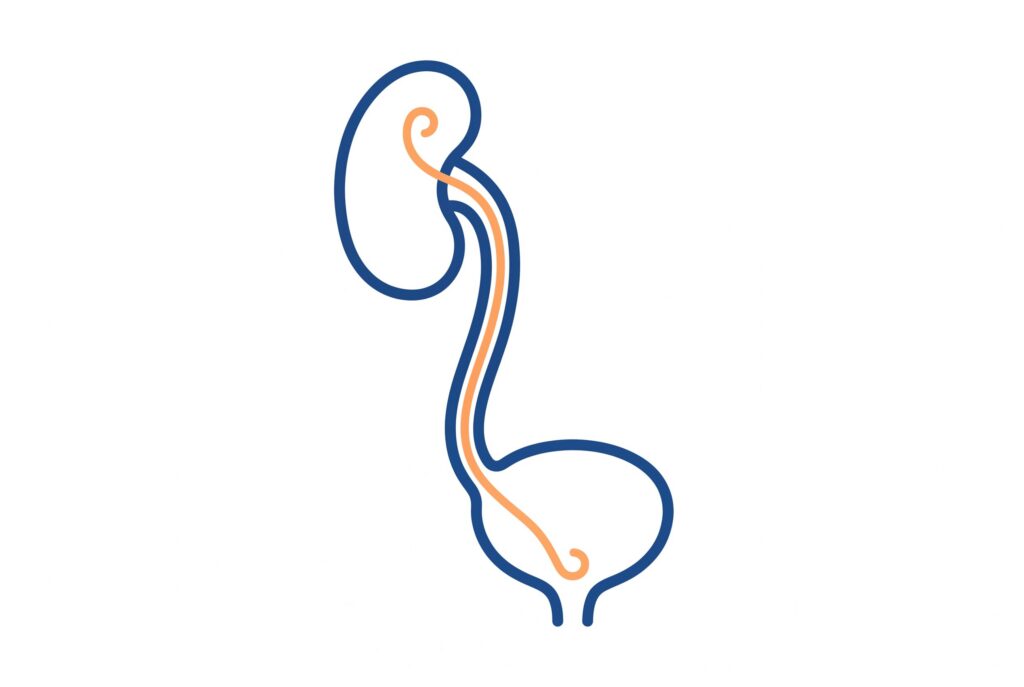
Ureteroscopy with laser lithotripsy
Ureteroscopy with laser lithotripsy is a minimally invasive procedure that uses a thin scope and a laser to break up kidney and ureteral stones from the inside, with no cuts on your skin. Most people go home the same day.

Briefly about this treatment
Indications
Kidney or ureteral stones that are too large to pass on their own, are blocking the flow of urine, or keep causing pain or infection.
Risks
Bleeding, infection and temporary stent discomfort; rarely, injury or later narrowing of the ureter. Risks are minimised by treating any urine infection first, careful patient selection and an experienced urology team.
Pre-procedure
Urine test for infection, CT or other imaging of the stone, a review of your medicines (especially blood thinners), anesthesia consultation, and fasting per your hospital's protocol.
Follow-up
Stent removal a few days to about 2 weeks after the procedure, a check-up (often with imaging) to confirm the stone has cleared, and advice on preventing new stones.
What is Ureteroscopy with laser lithotripsy? An expert explains
The name describes two steps done in one session. First, ureteroscopy: your urologist guides a narrow, telescope-like instrument β rigid or flexible β through your urethra and bladder up into the ureter or kidney, using a small camera to find the stone directly. Second, laser lithotripsy: a thin laser fiber is passed through the scope to the stone. Most urologists now use a holmium laser, which delivers short, precise pulses of energy that fragment or „dust” the stone without damaging the surrounding tissue.
This combined approach is one of the standard options in current urology guidelinesΒ for stones that are too large to pass on their own or that are causing a blockage.
Signs it may be time for Ureteroscopy with laser lithotripsy
A small stone often passes by itself. A stone that is larger, stuck, or causing trouble usually announces itself, and these are the signs people most often notice:
- Sharp, cramping pain in your side or back that can spread towards the lower abdomen or groin, and that comes in waves
- Pain or burning when you pee, or an urgent need to go more often than usual
- Pink, red or brown urine
- Nausea or vomiting alongside the pain
- Fever or chills, which can mean a blocked or infected kidney
- Pain that has lasted for weeks, or stones that keep coming back
None of these proves you need a procedure. They are simply the reasons a urologist may look for a stone and, if it isnβt passing, suggest removing it.
Stones and kidney problems linked to this treatment include:
- Nephrolithiasis (Kidney Stones): hard mineral deposits in the kidney that cause pain and blockage and are the most common reason for this procedure.
- Calcium Oxalate Stones: the most common stone type, often too hard or too large to pass without help.
- Uric Acid Stones: stones linked to acidic urine, treated with the scope and laser when they cause a blockage.
- Recurrent Kidney Stones: stones that keep coming back, where scope-based treatment can clear the stone and a lab test can show what itβs made of.
- Obstructive Nephropathy: kidney strain caused by urine that canβt drain, where clearing the blockage protects kidney function.
Β

When to consult a specialist
If some of these symptoms sound familiar, take a breath: stones are common and very treatable. A simple urine test, a blood test and a scan are usually enough to show whether a stone is there, how big it is and whether it needs treatment. Many stones pass on their own, and for the ones that don’t, this procedure is routine and usually done as a day case. If the pain is severe, you have a fever, or you can’t pass urine, get medical help the same day. Otherwise, you can talk it through with a urologist at your own pace. Ready to take the next step? Find a specialist who treats kidney stones.
How a session works
Before you arrive
- No solid food after midnight the night before (your care team will confirm exact timing; small sips of clear liquid may be allowed up to 2 hours before).
- A urine test in the weeks before, to check for a urinary tract infection β you’ll need antibiotics first if one is found.
- A CT scan or other imaging beforehand so your urologist knows the stone’s exact size, location, and likely composition.
- Arrange a ride home, since you won’t be able to drive after anaesthesia.
Your care team typically includes a urologist, an anaesthetist or nurse anaesthetist, nursing staff, and a scrub technician.
During the procedure
- You’re given general anaesthesia (asleep) or spinal anaesthesia (numb from the waist down) so you feel nothing.
- Your urologist passes the ureteroscope through your urethra and bladder, then guides it up into the ureter β and into the kidney if needed β using the scope’s camera and, often, live X-ray guidance.
- Once the stone is in view, your urologist chooses one of two approaches depending on its size, location, and makeup:
- Small stones may be captured whole with a small wire basket passed through the scope.
- Larger stones are fragmented: a thin laser fiber (usually a holmium laser) is threaded through the scope, and short pulses of laser energy break the stone into tiny pieces or dust. Fragments are then suctioned, flushed out, or left to pass naturally in your urine.
- Your urologist may send a stone fragment to a lab afterwards to identify what it’s made of β useful for preventing future stones.
- In most cases, a temporary ureteral stent is placed at the end of the procedure, running from the kidney down to the bladder, to keep the ureter open and help everything drain while you heal. It sits entirely inside your body; some stents have a removal string that’s taped to your leg.
Benefits
The main advantage of this treatment is that it reaches the stone through your body’s natural passages, so recovery is usually gentler than with surgery that involves a cut. The benefits people notice most:
- No incisions. Nothing is cut or stitched, because the scope travels through your urethra, bladder and ureter.
- Usually a day case. Most people go home the same day.
- Reaches stones other methods can’t. It can treat stones that shock wave lithotripsy (ESWL) cannot break effectively, in any part of the ureter or kidney.
- Immediate answer. Your urologist sees the stone directly, so they know straight away whether it has been cleared.
- A fit for more situations. It can be an option in pregnancy, with a higher body weight, or with a bleeding disorder or blood thinners, where other treatments are harder.
- Clues to prevent new stones. A stone fragment can be analysed, which helps guide prevention.
In short, you get a precise, minimally invasive way to remove the stone and a clear picture of what to do next.
Risks & side effects
The treatment has risks and trade-offs to discuss with your care team. The information below comes from this treatmentβs data and trusted clinical sources.
Bleeding, infection and stent discomfort are the most common. Risks are minimised by treating any urine infection beforehand, careful patient selection and an experienced urology team.
Common side effects after the procedure are usually mild and settle within days:
- Blood in your urine. Pink or red-tinged urine is expected, especially with a stent, and doesnβt mean something has gone wrong.
- Stent symptoms. A stent can cause a frequent or urgent need to pee, bladder spasms, a burning feeling and some flank discomfort until it comes out.
- Tiredness and mild pain. You may feel more tired than expected, and pain relief usually keeps discomfort mild to moderate.
- Anaesthesia effects. Drowsiness or nausea can follow any anaesthesia.
Who it may not suit: Very large or complex stone loads may be better treated another way, such as percutaneous nephrolithotomy (PCNL). An untreated urine infection or blood-thinning medicines need to be dealt with first, and your team will plan around them. These are general cautions, not a personal verdict. A qualified clinician must assess your full medical picture before recommending or delaying treatment.
Β

What happens during & after
During. You’re asleep (or numb from the waist down) and feel nothing. The scope reaches the stone, the laser breaks it up, and the fragments are removed or left to pass. The procedure itself usually takes 1 to 2 hours, and a temporary stent is placed at the end in most cases.
Right after. You’ll be monitored in a recovery area for an hour or two as the anaesthesia wears off. Because this is an outpatient procedure, you go home the same day in the vast majority of cases β you won’t stay overnight unless your urologist has a specific reason to keep you in. Plan for about 4 hours at the hospital or surgery center in total. For the day-by-day picture once you’re home, see Recovery below.
Possible complications
Serious problems are uncommon, but it helps to know what your team watches for. Most can be treated if they’re spotted early, which is why you’ll be told exactly when to call.
- Infection or sepsis. More likely if the stone was already infected going in, which is why urine is checked and treated beforehand. Fever, chills or feeling very unwell afterwards need prompt attention.
- Ureteral injury. The ureter can be scratched or, rarely, perforated by the scope or laser, which may need a longer stent time.
- Ureteral stricture. Scar tissue can narrow the ureter after healing, in a small proportion of cases, and may affect drainage in the long term.
- Leftover stone fragments. Very large or numerous stones may need a second, planned procedure to finish clearing them.
- Urinary retention. Occasionally you can’t fully empty your bladder, which may need a short-term catheter.
- Stent problems. A stent can shift or fall out earlier than planned.
This is general information, not a personal risk assessment. Your urologist can tell you which of these apply to your stone and health history.
New or severe symptoms require prompt medical advice. Do not wait for a routine appointment if you feel seriously unwell.
Recovery
Most people feel back to normal within a few days of the stent coming out. Until then, recovery is mostly about managing stent symptoms and drinking plenty of water.
First 24β48 hours. Mild burning when you pee, pink or red-tinged urine, cramping and a frequent or urgent need to urinate are common. They usually settle within a day or two. Pain relief, fluids and warmth (a heating pad or warm compress) help.
While the stent is in. Expect more discomfort and tiredness than the first day alone would suggest; this is normal and temporary. Your urologist will tell you when the stent comes out, typically a few days to about two weeks after the procedure, either with a removal string or in a short visit.
The following weeks. It can take 8 weeks or longer for all stone dust and fragments to clear, so keep drinking water. A follow-up visit, sometimes with imaging, confirms the stone is gone, and if your stone was analysed your urologist will explain what it means for preventing new ones.
Self-care that helps
- Drink plenty of water throughout recovery
- Take pain relief and any prescribed medicines (including alpha-blockers, if given) as directed
- Use a heating pad or warm compress for cramping
- Keep moving: walking is fine, even if your urine looks a little darker afterwards
Specialists for Ureteroscopy with laser lithotripsy
Specialists linked to this treatment in the KidneyGlobal directory. Review credentials and confirm availability directly before booking.
Verified specialists


Clinics offering Ureteroscopy with laser lithotripsy
Verified kidney centres linked to this treatment in the KidneyGlobal directory.


Cleveland Clinic Glickman Urological & Kidney Institute
β Accredited
Johns Hopkins Brady Urological Institute
β AccreditedMost Common Questions
Is ureteroscopy the same thing as lithotripsy?
Not quite. Ureteroscopy is the scope-based procedure that reaches the stone; lithotripsy is the general term for breaking a stone apart. Here the scope gets your urologist to the stone and the laser breaks it up.
How is this different from shock wave lithotripsy (ESWL)?
ESWL breaks stones from outside the body with focused sound waves and no scope. Ureteroscopy reaches the stone directly, so it can treat stones ESWL can't break well and confirm the stone is gone in the same session.
Will I feel the laser or the procedure?
No. You're under general or spinal anesthesia, so you're either asleep or numb from the waist down and won't feel it.
Do I always need a stent afterwards?
Usually, yes. A temporary stent keeps the ureter open while it heals and is removed a few days to about 2 weeks later. Your urologist decides based on your stone and how the ureter looks.
How long until I can go back to work and normal life?
Most people return to normal activities a few days after the stent comes out. Stone dust can keep clearing for 8 weeks or longer, so keep drinking water.
Can the stones come back?
Yes, stones can recur. Analysing a stone fragment, drinking enough fluid and following your urologist's diet or medicine advice can lower the chance of new ones.
Sources
- Surgical Management of Kidney and Ureteral Stones: AUA GuidelineAmerican Urological Association
- Ureteroscopy (URS) for kidney stones β EAU Patient InformationEuropean Association of Urology
- Ureteroscopy: Purpose, Procedure, Risks & RecoveryCleveland Clinic
- Cystoscopy & UreteroscopyNIDDK (US National Institutes of Health)
- Cost data on ureteroscopy procedures (cost study, 2022)Urolithiasis (Springer)
- Cost survey of stone imaging and interventions across countries (2025)Journal of Endourology (PubMed)
- Nationwide rates for HCPCS 52353 (ureteroscopic stone removal)Tynbil