
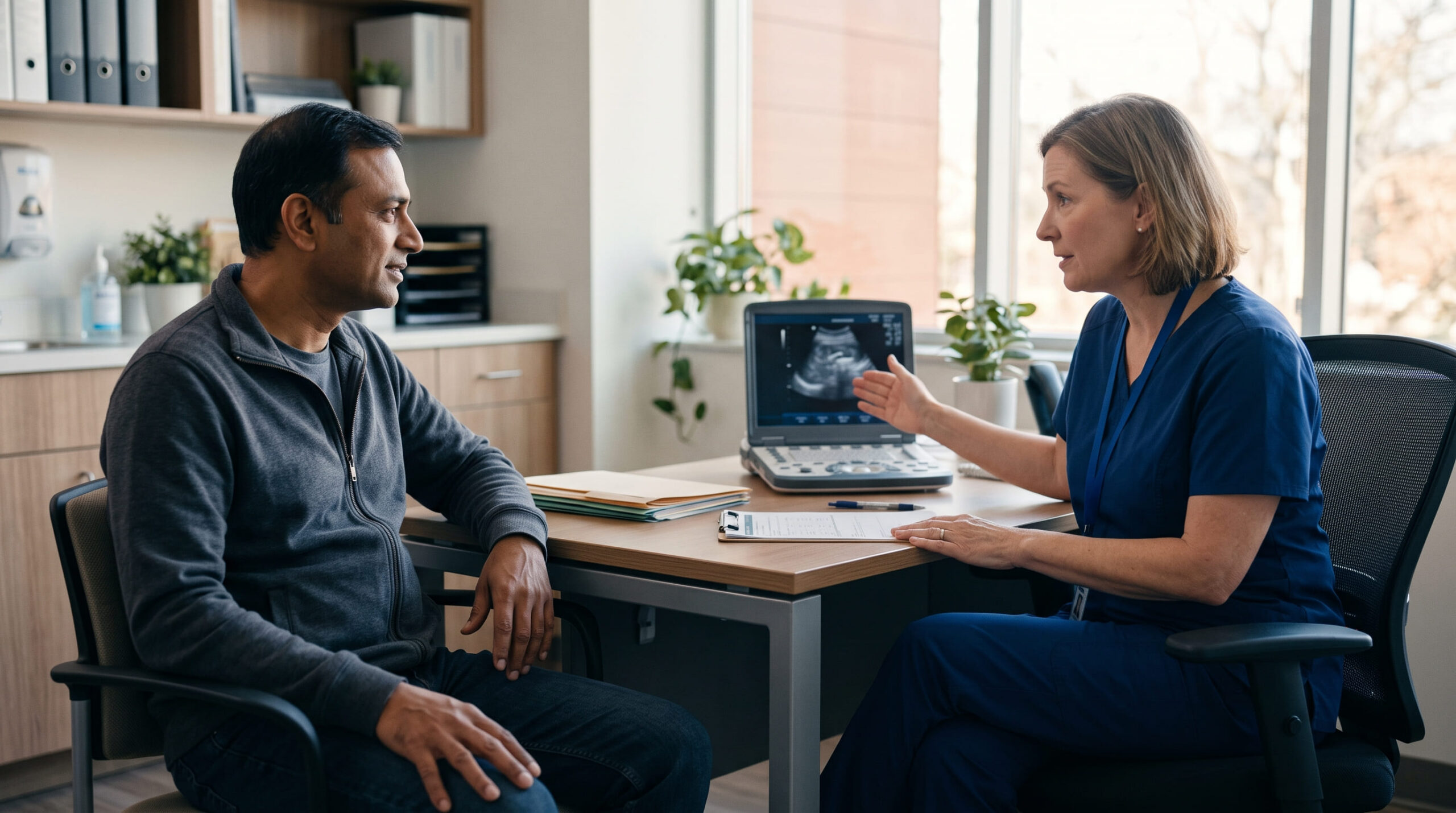


Transplant biopsy
A transplant biopsy is a quick, ultrasound-guided procedure that removes a tiny sample of tissue from a transplanted kidney to find out why it isn't working as well as it should, or to catch silent damage before it causes symptoms.

Briefly about this treatment
Indications
A rising creatinine level or declining graft function, new protein or blood in the urine, unexplained swelling, or a scheduled surveillance check at a set point after transplant (commonly 3 and 12 months).
Risks
Bleeding, infection, and rarely injury to a nearby structure. Risks are minimised by ultrasound guidance, careful patient selection, and experienced transplant teams.
Pre-procedure
Blood tests including clotting studies and platelet count, a review (and often pausing) of blood-thinning medications, and ultrasound imaging to plan a safe needle path.
Follow-up
Several hours of on-site monitoring right after the procedure, a call or visit once pathology results return (usually within days), and ongoing monitoring of graft function with your transplant team.
What is Transplant biopsy? An expert explains
Doctors order a transplant biopsy because blood and urine tests alone can’t always explain what’s happening inside a transplanted kidney. A rising creatinine level, new protein in the urine, or a scheduled „check-up” biopsy at a set time after surgery can all be reasons to look more closely. Because the transplanted kidney sits just under the skin of the lower abdomen (rather than deep in the back, like a native kidney), it’s actually easier and safer to reach with a biopsy needle than a native kidney would be.
There are two broad reasons a transplant biopsy is performed:
- Indication biopsy β something is already wrong (rising creatinine, protein in the urine, unexplained graft dysfunction), and the biopsy is done to find the cause, such as rejection, drug toxicity, viral infection (like BK virus), or recurrence of the original kidney disease.
- Protocol (surveillance) biopsy β performed on a schedule, often around 0, 3, and 12 months after transplant, to catch „silent” rejection or scarring before it causes symptoms or lab changes.
Signs it may be time for Transplant biopsy
You or your care team might notice:
- A rising creatinine level or a drop in how well the kidney is filtering blood
- New or increasing protein or blood in the urine
- Reduced urine output
- Swelling in the legs, ankles, or around the eyes
- Unexplained fever or tenderness over the transplant site, especially early after surgery
- A scheduled surveillance biopsy timepoint coming up in your transplant protocol
None of these on their own means something has gone wrong β theyβre simply the signals a transplant nephrologist uses to decide whether a closer look is needed.
These are the conditions linked to this treatment in the directory. Your clinician decides whether treatment is appropriate using your symptoms, examination and test results.
- Acute Transplant Rejection β Immune-mediated rejection of the kidney graft.
- Chronic Transplant Rejection β Long-term immune damage leading to graft failure.
- BK Polyomavirus Nephropathy β Viral infection affecting the graft kidney.
- Post-Transplant Glomerulopathy β Chronic rejection causing glomerular thickening.
- Calcineurin Inhibitor Toxicity β Immunosuppressant-induced vasoconstriction and fibrosis.
Remember: These entries are not a diagnosis or a treatment recommendation. Discuss your symptoms and test results with a qualified clinician.

When to consult a specialist
If your latest blood test shows a change in creatinine, or you’ve noticed new swelling, less urine than usual, or tenderness near your transplant, it’s worth getting checked β most of the time this turns out to be something straightforward, and catching it early generally means simpler treatment and a better outcome for your graft. You don’t need to wait for things to get worse to ask. Find a transplant specialist to go over your results and next steps.
How a session works
- Preparation β Blood tests (including clotting studies and platelet count) are usually checked beforehand, and blood-thinning medications are often paused in the days leading up to the biopsy.
- Positioning β Because the transplant sits in the lower abdomen, the patient lies on their back (unlike a native kidney biopsy, which is done lying face-down).
- Imaging guidance β An ultrasound technologist and radiologist or nephrologist locate the kidney and identify a safe path for the needle, avoiding major blood vessels and the collecting system.
- Local anesthesia β The skin and deeper tissue over the biopsy site are numbed with a local anesthetic; some centers add light sedation.
- Needle pass β Using real-time ultrasound guidance, a spring-loaded biopsy needle is advanced into the kidney and one or more small core samples (about the size of a pin) are collected.
- Sample handling β The tissue is sent to a pathology lab, where it is processed and examined under different types of microscopy to assess for rejection, infection, drug toxicity, or scarring.
- Recovery monitoring β The patient rests, usually lying flat, while staff check blood pressure and watch for signs of bleeding.
Benefits
A transplant biopsy gives information no blood or urine test can provide, and it directly shapes how your care team manages your medication. Specifically, it:
- Provides a precise, tissue-level diagnosis that blood and urine tests cannot give on their own
- Distinguishes between different causes of graft dysfunction β rejection, drug toxicity, viral infection, recurrent disease, or scarring β each of which is treated differently
- Can detect „subclinical” rejection before creatinine rises, allowing earlier treatment
- Directly guides changes to immunosuppression and other transplant medications
- Is relatively quick, minimally invasive, and done under real-time imaging guidance for safety
Risks & side effects
The treatment has risks and trade-offs to discuss with your care team. The information below comes from this treatmentβs data.
Bleeding, infection, and rarely injury to a nearby structure. Risks are minimised by ultrasound guidance, careful patient selection, and experienced transplant teams. Most issues are minor β brief blood in the urine or soreness at the site that fades within days β but a small number of people face a higher chance of significant bleeding, particularly in the first week after transplant.
- Bleeding at or around the biopsy site, sometimes visible as blood in the urine
- Bruising, tenderness, or discomfort at the site for a few days
- A small risk of significant bleeding requiring a blood transfusion or, rarely, a procedure to stop it
- Temporary urinary retention
- Infection
- A sample that turns out to be insufficient for diagnosis, occasionally requiring a repeat biopsy
Who it may not suit: People on strong blood thinners, with uncontrolled high blood pressure, or with a known bleeding disorder may need extra precautions, closer monitoring, or a change in timing. These are general cautions, not a personal verdict. A qualified clinician must assess your full medical picture before recommending or delaying treatment.

What happens during & after
During the procedure itself, patients typically feel pressure and a brief pinch as the needle is inserted, sometimes with mild aching for a few seconds. Many centers ask the patient to hold their breath briefly during each needle pass to keep the kidney still.
Afterward, patients are monitored on-site for several hours β commonly 3 to 6 hours β with periodic blood pressure checks and observation for blood in the urine. Strenuous activity, heavy lifting, and exercise are generally avoided for 24 to 48 hours, and patients are advised to drink extra fluids to help flush the bladder. A driver is usually required if sedation was used. Full pathology results typically take a few days to return, and the transplant team will schedule a follow-up to discuss findings and any treatment changes.
Possible complications
Most complications from a transplant biopsy are mild and resolve on their own, but it’s worth knowing what to watch for.
- Brief blood in the urine or soreness at the site that fades within days (most common)
- Bleeding into the urine-collecting system, sometimes causing clot-related blockage
- Bleeding underneath the kidney’s outer capsule or into the surrounding space
- Larger bleeds that may need closer monitoring, a blood transfusion, or, rarely, an additional procedure to control them
People on blood thinners, with uncontrolled high blood pressure, or with a bleeding disorder are at somewhat higher risk and are managed with extra precautions.
New or severe symptoms require prompt medical advice. Do not wait for a routine appointment if you feel seriously unwell.
Recovery
Recovery from a transplant biopsy is usually short and straightforward:
- Immediately after: Rest lying flat for several hours (commonly 3β6) while vital signs and urine are monitored for signs of bleeding.
- First 24β48 hours: Avoid strenuous activity, heavy lifting, and exercise; drink extra fluids; watch for blood in the urine (a small amount for a few hours is common, but heavy or persistent bleeding should be reported immediately).
- Pain management: Mild soreness at the site can usually be managed with acetaminophen; NSAIDs are often avoided in transplant patients unless specifically approved, since they can affect kidney function.
- Return to normal activity: Most people resume regular, non-strenuous activities within a day or two.
- Follow-up: Pathology results generally take a few days; the transplant team will call or schedule a visit to review the findings and adjust treatment (such as immunosuppression) if needed.
- When to call the transplant team urgently: Heavy or worsening blood in the urine, inability to urinate, severe or worsening pain, fever, dizziness, or fainting.
Specialists for Transplant biopsy
Specialists linked to this treatment in the KidneyGlobal directory. Review credentials and confirm availability directly before booking.
Verified specialists

Clinics offering Transplant biopsy
Verified kidney centres linked to this treatment in the KidneyGlobal directory.


Northwestern Memorial Hospital Transplant Institute
β Accredited
Cleveland Clinic Glickman Urological & Kidney Institute
β Accredited
Mayo Clinic Kidney & Pancreas Transplant Center
β AccreditedMost Common Questions
Is a transplant biopsy painful?
Most patients feel a brief sting from the local anesthetic and some pressure during the needle pass, but the procedure itself is not typically described as very painful. Sedation may also be offered.
How long does the procedure take?
The biopsy itself is quick β commonly 30 to 60 minutes including preparation, positioning, and the ultrasound-guided needle passes.
Will I need to stay in the hospital?
Most transplant biopsies are done as an outpatient procedure with a few hours of monitoring afterward, though some centers keep patients overnight, especially early after transplant.
How is a transplant biopsy different from a native kidney biopsy?
A transplanted kidney sits in the lower abdomen (the iliac fossa) rather than the back, so the patient lies on their back instead of face-down, and the shallower location generally makes the biopsy technically easier and slightly lower risk than a native kidney biopsy.
What type of doctor performs a transplant biopsy?
It's typically performed by a transplant nephrologist or a radiologist, often with an ultrasound technologist assisting to guide the needle.
Do I need a referral to book a transplant biopsy?
In most cases, yes β the biopsy is ordered by your transplant nephrologist as part of your ongoing transplant care rather than booked independently.
Sources
- Kidney Biopsy: Purpose, Procedure, Risks & ResultsCleveland Clinic
- Kidney Biopsy: Procedure, Side Effects, RecoveryNational Kidney Foundation
- Renal Transplant BiopsyUAB Medicine
- Surveillance Biopsies of Transplanted KidneysUC Davis Health
- Renal Biopsy: Practice Essentials, Background, IndicationsMedscape
- Having a Transplant Kidney BiopsyHull University Teaching Hospitals NHS Trust