

Academic Medical Center
Comprehensive Nephrology & Transplant
Joint CommissionMagnet RecognitionUNOS Transplant Center
✓ 24/7 ER✓ ICU✓ Insurance
A CT urogram is a specialised CT scan — usually with an injected contrast dye — that gives doctors a detailed picture of the kidneys, ureters and bladder. It's a diagnostic test, not a treatment, most often used to investigate blood in the urine, suspected kidney stones, recurring urinary infections, or a possible tumor.
Blood in the urine (hematuria), suspected kidney stones, recurring or unexplained urinary tract infections, an abnormal finding on an ultrasound or X-ray, or monitoring for a history of urinary tract cancer.
Contrast reactions, radiation exposure, and contrast-related strain on kidney function in people with reduced kidney function. Risks are minimised by careful patient screening, a recent kidney-function blood test, and dose-minimisation protocols.
Screening for allergies (especially iodine or contrast), kidney problems, diabetes medications such as metformin, pregnancy and blood-thinning medicines; a recent creatinine blood test; light preparation such as drinking water beforehand so the bladder is comfortably full.
A radiologist reviews the images and sends a report to the referring doctor; results are usually discussed at a follow-up appointment rather than on the day, with extra hydration recommended afterward if contrast dye was used.
Think of it as a very detailed map of your urinary system. A regular X-ray or ultrasound can miss small stones, subtle blockages, or early tumors because it only shows part of the picture. A CT urogram scans your kidneys, the two thin tubes (ureters) that carry urine down to your bladder, and the bladder itself — all in one sitting. The contrast dye highlights these structures the way a torch highlights a shape in a dark room, so anything unusual (a stone, a narrowing, an abnormal growth) shows up clearly against the surrounding tissue. A radiologist — a doctor who specializes in reading these images — reviews the scan and sends a written report to the doctor who ordered it.
A CT urogram is usually ordered because of something a person notices, or something a doctor sees on an earlier test. Symptoms that commonly lead here include:
On their own, these symptoms don’t point to one single cause — that’s exactly why a more detailed scan is often the next step.
These are the conditions linked to this treatment in the directory. Your clinician decides whether a CT urogram is appropriate using your symptoms, examination and test results.
Remember: These entries are not a diagnosis or a treatment recommendation. Discuss your symptoms and test results with a qualified clinician.

If you’ve noticed blood in your urine, ongoing flank or back pain, or urinary infections that keep coming back, it’s worth asking your doctor for a simple blood and urine test rather than waiting to see if it passes. Most causes turn out to be manageable once they’re identified, and a scan like this is just one of the ways a specialist narrows down what’s going on — it isn’t a sign something serious is assumed. Find a specialist to talk through your symptoms and whether a CT urogram, or another test, is the right next step for you.
Before you arrive: you may be asked about allergies (especially to iodine or previous contrast reactions), kidney problems, diabetes medications such as metformin, pregnancy, and any blood-thinning medicines. A recent kidney-function blood test (creatinine) is often required beforehand, particularly if you’re over 60, diabetic, or have high blood pressure.
On the day: you may be asked to drink water beforehand so your bladder is comfortably full, and to avoid urinating in the final stretch before the scan. Light preparation only — you can usually eat and drink normally otherwise, unless told differently by your clinic.
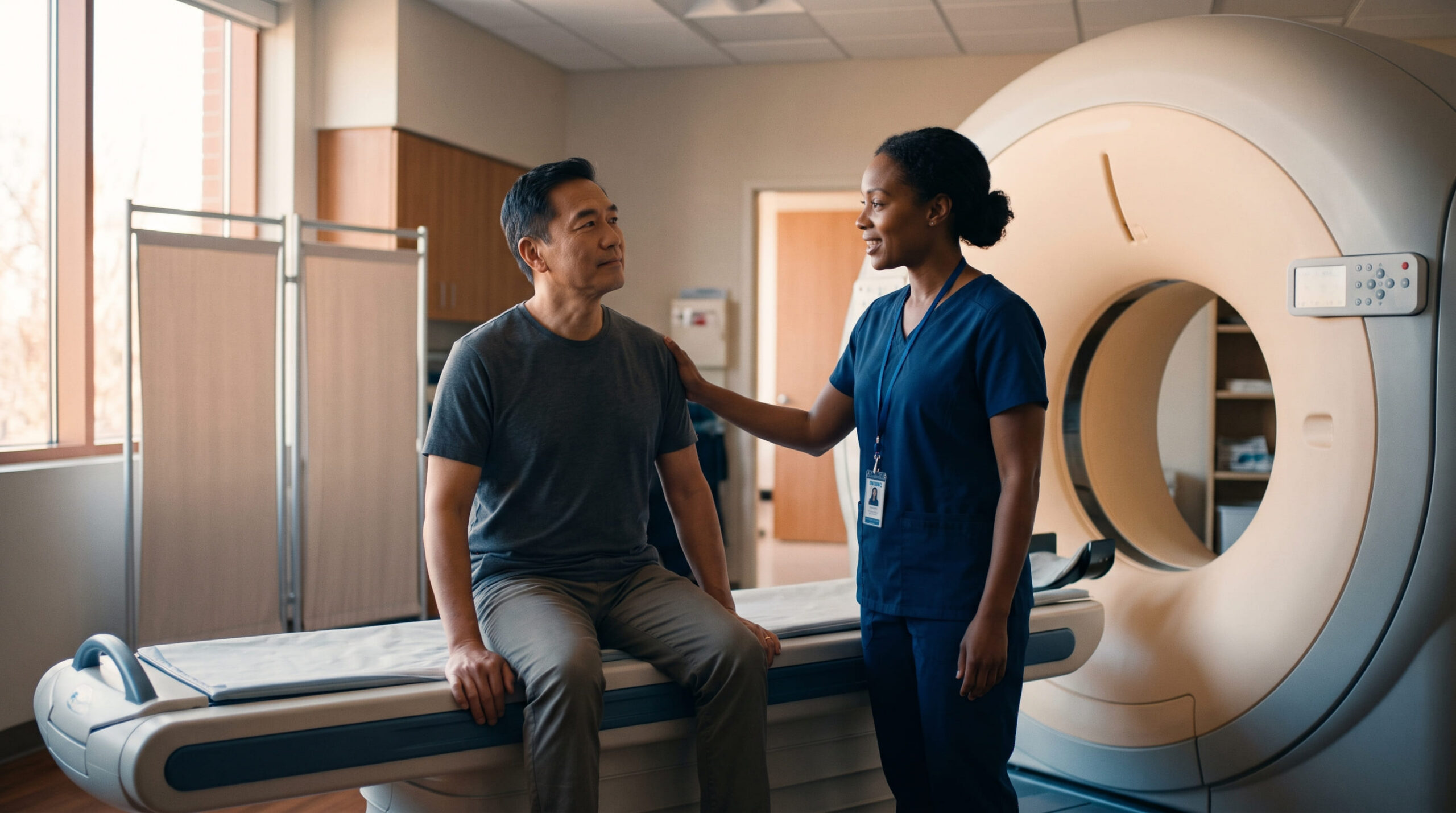
In the scanner: you’ll lie on a table that slides into a large, open, ring-shaped scanner. A small cannula is placed in a vein in your arm or hand for the contrast injection. The dye can cause a brief warm, flushing feeling — this is expected and passes quickly.
During scanning: the machine takes images at several points as the dye moves through your system, so there may be a few separate passes over 30–60 minutes in total. You may be asked to hold your breath for a few seconds at a time to keep the images sharp. The machine makes buzzing and clicking sounds; this is normal.
A CT urogram brings together several things older or narrower tests can’t:
For most people, it’s a quick way to turn an uncertain symptom into a clear answer their doctor can act on.
The treatment has risks and trade-offs to discuss with your care team. The information below comes from this treatment’s data: contrast reactions, radiation exposure, and contrast-related strain on kidney function. Risks are minimised by careful patient selection and experienced imaging teams.
Who it may not suit: these are general cautions, not a personal verdict. A qualified clinician must assess your full medical picture before recommending or delaying treatment. People who are pregnant, have significant contrast allergies, or have advanced kidney disease may need an alternative test, such as ultrasound or MRI.

Straight after the scan, the technologist checks the images for clarity before you leave, and the cannula is removed. If you had contrast dye, you may be asked to wait 15–30 minutes in the clinic in case of a delayed reaction, though this is uncommon. Most people resume normal activities, eating and drinking the same day. A radiologist interprets the images and sends a report to the doctor who referred you — plan on a follow-up appointment to go through the results together rather than expecting them immediately.
Serious complications are uncommon, and clinics screen for these risks in advance specifically to keep them rare:
Most people who have a CT urogram experience none of these; the screening questions beforehand exist to catch the small number of people who need a different approach.
New or severe symptoms require prompt medical advice. Do not wait for a routine appointment if you feel seriously unwell.
There’s generally no „recovery” in the way there is after a procedure — most people return to normal activities, including driving, eating and working, the same day. If contrast dye was used, drinking extra water for the rest of the day can help your kidneys clear it. Watch for any delayed reaction to the dye — such as a rash, itching, or feeling unwell — in the hours afterward, and contact your clinic if this happens. The main „next step” is your follow-up appointment, where your doctor explains what the images showed and what, if anything, happens next.
Verified kidney centres linked to this treatment in the KidneyGlobal directory.



It's a variation of a standard CT scan, timed and focused specifically to capture the kidneys, ureters and bladder as contrast dye passes through them — a regular abdominal CT isn't set up to do this.
Not always. A "plain" (non-contrast) pass can be used first to look for stones and bleeding, and contrast is added afterward for a fuller picture of the kidneys and urinary tract — your radiology team decides the exact protocol.
The scan itself is painless. The cannula insertion feels like a standard blood draw, and the contrast dye may cause a brief warm sensation rather than pain.
Plan for roughly 45–90 minutes total, including preparation, though the scanning itself is much shorter.
It depends how advanced it is. Your doctor and radiology team will check your kidney function first and may adjust the contrast dose, use extra hydration, or choose a different type of scan if needed.
A radiologist typically reviews the scan shortly after it's done and sends a report to your referring doctor; you'll usually go over the findings together at a follow-up visit rather than getting results on the day.