


Homeβ€Ί Treatmentsβ€Ί Automated peritoneal dialysis (APD)

Automated peritoneal dialysis (APD)

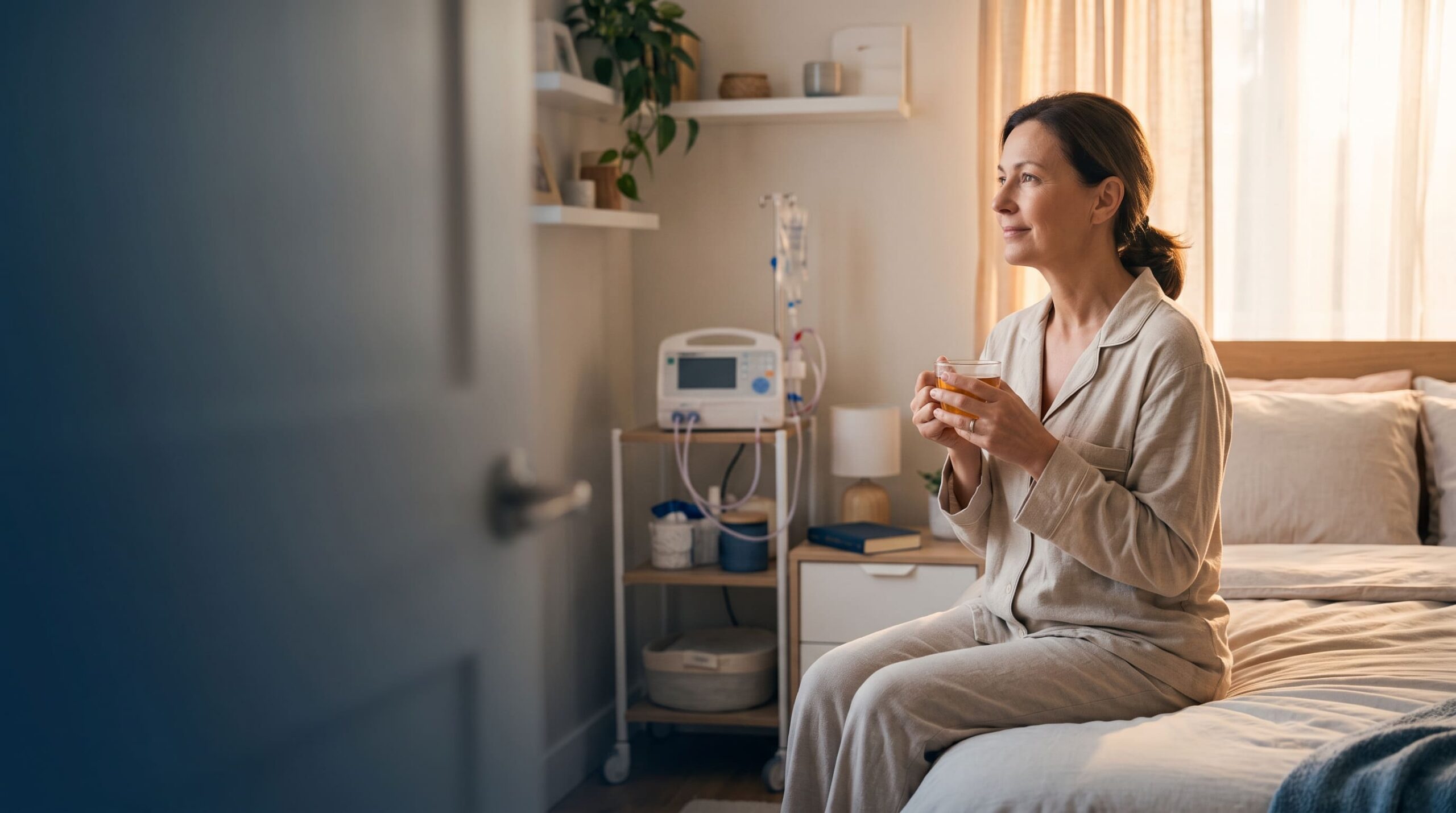
Automated peritoneal dialysis (APD) is a home dialysis treatment in which a machine, called a cycler, uses the lining of your abdomen to clean your blood while you sleep. It leaves your days largely free of treatment.

Automated peritoneal dialysis (APD)
Content verification
Prof. Sarah Johnson
Nephrology
Massachusetts General Hospital | Cleveland Clinic
Dr. Emily Rodriguez
Nephrology
Massachusetts General Hospital | Cleveland Clinic
Updated date
16-10-2026
Reading time
10 mins
Authors
KidneyGlobal Editorial Team
Based on treatment data in this directory
2 verified specialist reviewers

Briefly about this treatment

Indications

Kidney failure (end-stage kidney disease) where your kidneys can no longer remove enough waste and fluid, and in some cases severe acute kidney injury that needs temporary dialysis. APD is chosen when a home-based, overnight treatment suits your health, home setup and daily routine.

Risks

Infection of the catheter site or of the abdominal lining (peritonitis), catheter blockage or leakage, and fluid or weight changes. Risks are lowered by careful hygiene, thorough training and regular follow-up with an experienced PD team.

Pre-procedure

Blood tests and a review of your kidney function, a short procedure to place a soft catheter in your abdomen (usually healed for about two weeks before first use), and PD training for you and, if you wish, a caregiver.

Follow-up

Regular clinic visits, especially in the first weeks, then ongoing checks of how well your dialysis is working, your fluid balance, your catheter site and your remaining kidney function. Your nephrologist sets the schedule for you.

What is Automated peritoneal dialysis (APD)? An expert explains

APD is one of the two main types of peritoneal dialysis (PD). The other is CAPD, where you do the exchanges by hand several times a day. With APD, a programmable cycler does the exchanges for you, usually across 8–10 hours at night. Your nephrologist sets the number of cycles and the fluid volumes based on your body size and how much dialysis you need.

Because a machine can run more frequent, shorter exchanges than you would manage by hand, some people dialyze more effectively on APD than on CAPD. This includes „fast transporters”, whose peritoneum absorbs dialysis fluid quickly. A soft catheter is placed in your abdomen in advance, and that catheter is what you connect to the cycler each night.

Note: Prof. Sarah Johnson is listed as a specialist reviewer for this treatment.

Signs it may be time for Automated peritoneal dialysis (APD)

No single symptom means β€žstart APD”. The decision is always made with your nephrologist, based on blood tests (such as eGFR and creatinine) and how you feel. When kidneys can no longer clear waste and fluid, people often notice:

  • Persistent tiredness and low energy. Waste products and anaemia can leave you exhausted even after resting.
  • Nausea, poor appetite or a metallic taste. Food may stop appealing, and you may lose weight without trying.
  • Swelling in the ankles, legs, hands or around the eyes, or shortness of breath. These can mean fluid is building up in your body.
  • Itchy skin, muscle cramps (especially at night) and trouble sleeping. These are common as waste builds up in the blood.
  • Passing much less urine than before. This is not the case for everyone, so it is not a reliable sign on its own.

Conditions linked to APD

APD is used when these kidney conditions have progressed to the point where dialysis is needed:

  • End-Stage Renal Disease (ESRD): kidney failure, when your kidneys no longer work well enough to keep you well. This is the most common reason people start APD.
  • Chronic Kidney Disease (CKD): long-term, gradual loss of kidney function. As CKD reaches its later stages, your team will discuss dialysis options with you, and APD may be one of them.
  • Acute Kidney Injury (AKI): a sudden drop in kidney function. In some cases dialysis is needed for a period of time while the kidneys recover.

Β 

When to consult a specialist

If some of these symptoms sound familiar, try not to worry. They have many possible causes, and a simple blood test (including creatinine and eGFR) and a urine test can show how your kidneys are doing. Many people find that getting clear answers is the most reassuring step. And if your kidney function is lower than expected, there are well-established treatments and options, including home dialysis, and a team to guide you through them. A nephrologist can look at your results, explain what they mean and help you decide whether APD, another treatment or simply regular monitoring is right for you.

How a session works

Each night, a typical APD session looks like this:

  1. Set-up: Wash your hands, wear a mask, and set up the cycler with fresh tubing and the dialysis solution bags prescribed for you.
  2. Connect: Attach the tubing to your abdominal catheter.
  3. Cycles (fill β†’ dwell β†’ drain): The machine fills your abdomen with dialysis fluid and lets it dwell so waste and extra fluid pass from your blood into the fluid across the peritoneal membrane. It then drains the fluid out. One round is called an „exchange”, and the machine repeats it automatically, commonly 3–5 times over about 8–10 hours.
  4. Morning report and final fill: The cycler shows a summary of the night’s treatment and may leave a „final fill” of fluid in your abdomen for the day.
  5. Disconnect: You disconnect from the machine and carry on with your day.

The cycler has built-in alarms, for example for a slow drain, so you are alerted if something needs attention.

Session duration
8–10 hours per night
recorded for this treatment
Cost verify
$20000–$29000
indicative range per year
Anesthesia
None
recorded for this treatment
Remember: The exact steps, duration and preparation can vary with your indication, health and care setting. Confirm the current plan with your treating team.

Benefits

APD is designed to fit dialysis around your life rather than the other way round. Many people value the following:

  • Free days. Because the machine works overnight, you are not tied to daytime exchanges, which makes it easier to keep up work, school or caring for family.
  • Treatment at home. You dialyze in your own bed with no regular trips to a dialysis centre, which saves travel time.
  • Less manual work. The cycler handles the fill, dwell and drain timing, which can suit people who find several daily manual exchanges difficult.
  • Flexible prescriptions. Your team can adjust the number and length of exchanges to your body and how your peritoneum works, which helps some people, including fast transporters, get better results.
  • A good option for children and working adults. APD is the most commonly used form of PD for children, because it lets them attend school during the day.
  • More flexible diet and fluid limits for many people than with in-center haemodialysis. Your renal dietitian will tailor this for you.

Risks & side effects

APD has risks and trade-offs to discuss with your care team. The information below comes from this treatment’s data.

Infection of the catheter site or abdominal lining, catheter problems, and fluid or weight changes. Risks are minimised by careful hygiene, thorough training and an experienced PD team.

Common risks and side effects

  • Infection. Germs can enter around the catheter or through the tubing. Good hand hygiene and clean technique, which you will be trained in, are the best protection.
  • Catheter problems. A line can kink, block or leak, which usually triggers a β€žslow drain” alarm and is often fixed by your PD nurse.
  • Fluid and weight changes. Dialysis fluid contains glucose (a sugar), which can affect your weight and blood sugar, so your team monitors this.
  • Sleep disruption. It can take a few weeks to get used to sleeping while connected to the machine.
  • Feeling of fullness or mild abdominal discomfort during fill, which often eases with time.
  • Hernia risk. Fluid in the abdomen raises pressure on the abdominal wall, which can lead to hernias in some people.

Who it may not suit: These are general cautions, not a personal verdict. A qualified clinician must assess your full medical picture before recommending or delaying treatment. APD may be less suitable if you have extensive abdominal surgery or scarring, certain hernias or abdominal wall problems, or if safe home set-up and clean technique are not possible without support.

What happens during & after

  • During the night: You are connected to the cycler, which fills, holds and drains the fluid on its own schedule. You can sleep, and if you need to get up, your training covers how to pause and reconnect safely.
  • In the morning: You disconnect, check the machine’s report and the drained fluid (it should look clear), and carry on with your day. Your team will tell you whether you need a daytime exchange.
  • In the first weeks: Expect an adjustment period while you learn the machine, build a bedtime routine and get used to the alarms. Most people settle in with support from their PD nurse.
  • Longer term: You will have regular clinic visits to check how well your dialysis is working, your fluid balance and your peritoneal membrane. Your prescription may be adjusted over time.

Possible complications

Serious complications are less common, but it helps to know what to look for so you can act early.

  • Peritonitis (infection of the abdominal lining). Warning signs are cloudy drained fluid, abdominal pain, fever, nausea or vomiting. It needs prompt medical attention, so call your PD team the same day.
  • Exit-site or tunnel infection. Redness, tenderness, swelling or discharge around the catheter. Early treatment usually works well.
  • Catheter malfunction. Persistent poor drainage or leaking may need the catheter repositioned or replaced.
  • Hydrothorax. In rare cases dialysis fluid tracks into the chest cavity and causes breathlessness, which needs a medical assessment.
  • Inadequate dialysis or fluid overload. If the prescription no longer matches your needs, you may feel swollen or unwell. Regular adequacy checks are designed to catch this.
Remember:

New or severe symptoms require prompt medical advice. Do not wait for a routine appointment if you feel seriously unwell.

Recovery

Starting APD is less a „recovery” than a gradual adjustment. After catheter placement, the wound needs time to heal. The catheter can generally be used after about two weeks, and your team will tell you when to start. Training follows, usually over a few days, and your PD nurse stays closely involved in the first weeks.

Over the following weeks, most people find the nightly routine becomes familiar. Helpful habits include:

  • Checking your catheter site daily for redness, swelling or discharge.
  • Washing your hands and wearing a mask every time you connect or disconnect.
  • Keeping supplies organised and ordering ahead, especially before travel.
  • Attending your regular clinic visits, where your dialysis dose and fluid balance are reviewed.
  • Asking for support. Many people find talking with others on dialysis, or with their care team, makes the emotional side easier.

Everyone adapts at a different pace. If something feels hard, tell your PD nurse. Adjusting your prescription or your routine often makes a real difference. Treatments can also change over time, so you can discuss switching to CAPD, hemodialysis or a kidney transplant if your needs change.

Specialists for Automated peritoneal dialysis (APD)

Specialists linked to this treatment in the KidneyGlobal directory. Review credentials and confirm availability directly before booking.

Verified specialists

2 specialists match this treatment
Language β–Ύ
Online consultation β–Ύ
Rating β–Ύ
Specialisation β–΄
Treatment β–Ύ
Accepting new patients β–Ύ
Prof. Sarah Johnson
4,9
β˜…β˜…β˜…β˜…β˜…
156 reviews
πŸŽ—Nephrology Β· Transplant Nephrology Β· Pediatric Nephrology
πŸ…15 years of experience
πŸ₯Massachusetts General Hospital Β· Cleveland Clinic
πŸ“Boston, MA, United States Β· Telemedicine Β· Accepting new patients
πŸ—£English Β· French Β· Spanish
Dr. Emily Rodriguez
4,7
β˜…β˜…β˜…β˜…β˜…
94 reviews
πŸŽ—Nephrology Β· Dialysis Β· Hypertension
πŸ…8 years of experience
πŸ₯Massachusetts General Hospital Β· Cleveland Clinic
πŸ“Miami, FL, United States Β· Telemedicine Β· Accepting new patients
πŸ—£English Β· Portuguese Β· Spanish

Clinics offering Automated peritoneal dialysis (APD)

Verified kidney centres linked to this treatment in the KidneyGlobal directory.

Cleveland Clinic Glickman Urological & Kidney Institute
Specialty Hospital
Comprehensive Kidney & Urologic Care
πŸ“ Cleveland, OH, United StatesπŸ› 420 bedsπŸ—“ Est. 1984πŸ—£ English, Spanish, French
Joint CommissionU.S. News Best HospitalCenter of Excellence
βœ“ 24/7 ERβœ“ ICUβœ“ Insurance
4,8β˜…β˜…β˜…β˜…β˜…433 reviews
Mayo Clinic Kidney & Pancreas Transplant Center
Academic Medical Center
Advanced Transplantation
πŸ“ Rochester, MN, United StatesπŸ› 350 bedsπŸ—“ Est. 1963πŸ—£ English, Spanish, French
Joint CommissionUNOS ExcellenceInternational Patient Center
βœ“ 24/7 ERβœ“ ICUβœ“ Insurance
4,8β˜…β˜…β˜…β˜…β˜…370 reviews
Good questions

Most Common Questions

Is APD painful?

Once your catheter has healed, connecting to the cycler and the nightly cycles are not usually painful. Some people feel fullness or mild cramping while the fluid fills, which often eases with time. Tell your care team if you have ongoing or worsening pain, as it can be a sign of a problem such as infection.

Can I travel, work or go to school on APD?

Often yes. Because the treatment runs overnight, many people keep working or studying during the day, and APD is widely used for children for this reason. Travelling takes planning, because your clinic needs to arrange supplies at your destination, so tell your team well in advance.

What is the difference between APD and CAPD?

Both use your abdominal lining to clean your blood. With CAPD, you do manual exchanges several times during the day. With APD, a machine does them overnight while you sleep. Neither is better for everyone, and your nephrologist will help you choose based on your health and lifestyle.

How do I know if I have an infection?

The most important sign is cloudy drained fluid. Others include abdominal pain, fever, nausea, or redness and discharge around the catheter. Contact your PD team the same day if you notice any of these.

Will APD cure my kidney failure?

No. APD replaces part of the work your kidneys can no longer do, but it is not a cure. Some people stay on dialysis long term, some move to a kidney transplant, and in acute kidney injury some people recover enough to stop. Your nephrologist can tell you what to expect in your case.

Sources

  1. Peritoneal Dialysis Fact SheetAmerican Nephrology Nurses Association (ANNA)
  2. Peritoneal Dialysis: What You Need to KnowNational Kidney Foundation
  3. Introduction to Peritoneal Dialysis (PD)Kidney Care UK
  4. Tailoring Automated PD to Your Life(J. Bargman, MD) Home Dialysis Central
  5. Getting ready for Peritoneal Dialysis at HomeOxford University Hospitals NHS Foundation Trust (Oxford Kidney Unit)
  6. What Is Automated Peritoneal Dialysis?Fresenius Kidney Care
  7. What is Peritoneal Dialysis?University Hospitals Birmingham NHS Foundation Trust
  8. Hydrothorax as a Complication of Peritoneal Dialysis: A Case ReportCase Reports in Nephrology and Dialysis / PubMed Central (Piscitani et al., 2025)
  9. Current costs of dialysis modalities: A comprehensive analysis within the United KingdomPeritoneal Dialysis International / Bangor University
  10. Is the cost of the new home dialysis techniques still advantageous compared to in-center hemodialysis?Frontiers in Medicine