
Home› Treatments› Arteriovenous fistula or graft creation

Arteriovenous fistula or graft creation

Arteriovenous (AV) fistula or graft creation is a small operation that connects an artery to a vein in your arm so you can be linked safely to a dialysis machine. A fistula uses your own vessels; a graft uses a soft synthetic tube when your veins aren't suitable.

Arteriovenous fistula or graft creation
Content verification
Updated date
16-10-2026
Reading time
8 mins
Authors
KidneyGlobal Editorial Team
Based on treatment data in this directory
0 verified specialist reviewers

Briefly about this treatment

Indications

Advanced chronic kidney disease or end-stage kidney disease where hemodialysis is planned, a failing peritoneal dialysis route, or a previous access that has stopped working.

Risks

Bleeding, infection, clotting or narrowing of the access, and a fistula that does not mature. Risks are reduced by early planning, vessel mapping and an experienced vascular team.

Pre-procedure

Ultrasound mapping of arm arteries and veins, standard blood tests, a review of your medicines, and an anaesthesia check. Fasting depends on the type of anaesthesia your team chooses.

Follow-up

Follow-up Check-ups at about 2 and 4–6 weeks, then regular monitoring (physical check, sometimes ultrasound) until the access is ready for needles and throughout dialysis. (Exact schedule is set by your surgical team.)

What is Arteriovenous fistula or graft creation? An expert explains

When your kidneys can no longer filter your blood well enough, hemodialysis does that job using a machine outside the body. To move enough blood in and out, your care team needs a vessel that can handle strong flow and repeated needles, and an ordinary vein can’t. During creation of an AV fistula, a vascular surgeon joins an artery directly to a nearby vein, usually in the forearm or upper arm. Over the next weeks, extra blood flow makes the vein wider and thicker (this is called maturation). If your veins are too small or weak, the surgeon may place an AV graft, a soft synthetic tube that links artery and vein; it can usually be used sooner, but it is more prone to infection and clots. Guidelines recommend planning access early, as part of an individual „Life-Plan” for kidney failure, so it is ready when you need it.

Signs it may be time for Arteriovenous fistula or graft creation

Kidney failure often creeps in slowly, so many people feel fairly well until the later stages. When kidney function drops far enough that dialysis is being discussed, you may notice:

  • Tiredness and weakness that rest doesn’t fix, because waste products are building up.
  • Swelling in the legs, ankles or around the eyes, and shortness of breath from extra fluid.
  • Nausea, poor appetite or a metallic taste, and sometimes itchy skin.
  • Passing much less urine than usual, or changes in how often you go.

These symptoms have many possible causes and don’t mean you need surgery, but together with falling kidney tests they are why your team starts planning access early.

Conditions linked to AV fistula or graft creation Access surgery is usually planned for people living with these conditions:

 

When to consult a specialist

If you recognise some of these symptoms, there’s no need to worry: they are common and can be checked with a simple blood test (creatinine/eGFR) and a urine test. Early checks give you and your team more time and more options. If you’ve been told your kidney function is low, ask your nephrologist whether it’s time to talk about dialysis access.

How a session works

  1. Vessel mapping. An ultrasound checks the size and flow of your arm’s arteries and veins to choose the best site, starting as far down the arm as possible.
  2. Anaesthesia. The area is numbed (local, regional block, or sedation).
  3. Connection. Through a small incision, the surgeon stitches the artery to the vein (fistula) or sews a synthetic tube between them (graft).
  4. Check. The surgeon feels for a „thrill”, a gentle buzzing that shows blood is flowing well.
  5. Closing. The cut is closed and the arm is dressed; most people go home the same day.
Session duration
1–2 hours
recorded for this treatment
Cost verify
$800–$5000
indicative range
Anesthesia
Local
recorded for this treatment
Remember: The exact steps, duration and preparation can vary with your indication, health and care setting. Confirm the current plan with your treating team.

Benefits

A well-working access is the „lifeline” for hemodialysis, and a fistula in particular offers lasting advantages.

  • Reliable, high blood flow. Lets dialysis clean your blood effectively and efficiently.
  • Lower infection and clotting risk with a fistula. Using your own vessels avoids foreign material, and fistulas are less likely to clot or get infected than grafts or catheters.
  • Longer life. A fistula can serve for many years, so you need fewer repeat procedures.
  • Graft as a backup. If veins are small, a graft still avoids a catheter and is usable sooner after surgery.
  • Fewer daily limits. Once healed, you can usually shower, swim and live normally, with no tube hanging outside the body like a catheter.

Risks & side effects

This treatment has risks and trade-offs to discuss with your care team. The information below comes from this treatment data.

Bleeding, infection, clotting or narrowing of the access, and a fistula that does not mature. Risks are reduced by early planning and an experienced vascular team.

Common, usually mild effects:

  • Bruising and swelling around the incision for several days; raising the arm helps.
  • Soreness or tightness in the arm, managed with the pain relief your team advises.
  • Tingling or a cool hand for a short time as blood flow adjusts.
  • A visible bulge along the vein as it enlarges; this is the access developing.

Who it may not suit: These are general cautions, not a personal verdict. People with very small or damaged arm veins, severe heart failure, or blocked central veins may need a graft or another route. A qualified clinician must assess your full medical picture before recommending or delaying treatment.
What happens during & after

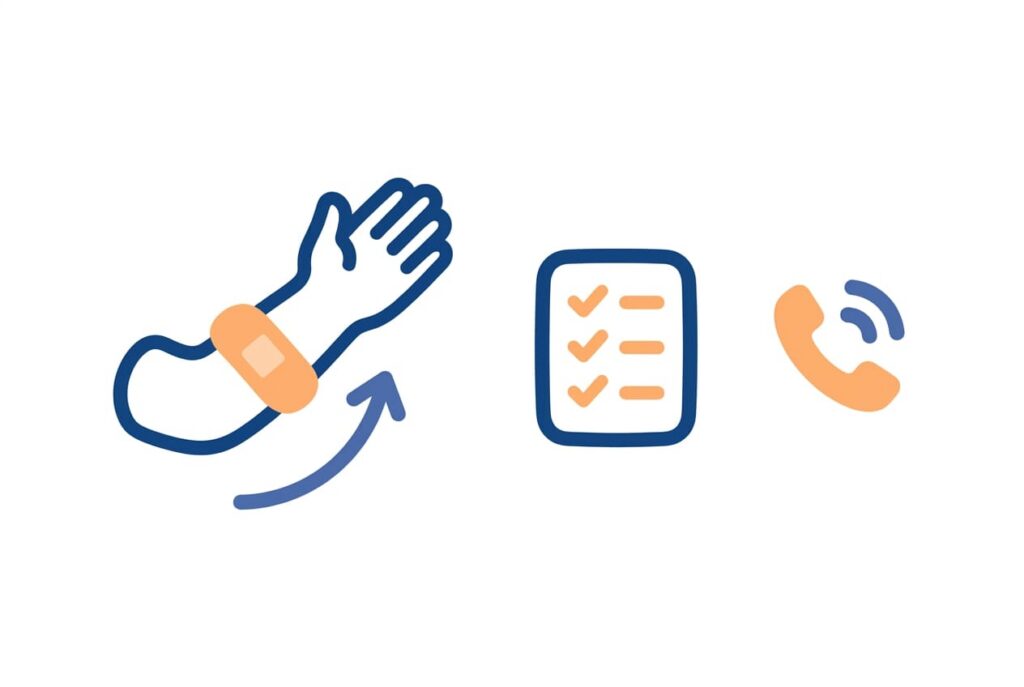
During surgery you’ll feel pressure and tugging but shouldn’t feel sharp pain. Straight afterwards, the team checks for the thrill and your hand’s warmth and colour, and you rest briefly before going home. You’ll be asked to keep the arm raised, keep the dressing dry and avoid heavy lifting. Over the next weeks to months a fistula matures, widening until it can take dialysis needles. A graft usually heals within a few weeks. Follow-up visits (and sometimes ultrasound) confirm it’s ready.

Possible complications

Complications are well known, and your team watches for them, so most are caught and treated early.

  • Failure to mature. Some fistulas stay too small to use; reports suggest fistula failure in the first year can affect up to about 4 in 10 people. A minor follow-up procedure often rescues them.
  • Narrowing (stenosis) or clotting (thrombosis). The most common problems; they may need a balloon procedure or revision.
  • Infection. Less likely with a fistula than a graft; signs are redness, warmth, pain or fever.
  • Steal syndrome. The access draws too much blood from the hand, causing coldness, numbness or pain; it may need correction.
  • Aneurysm or swelling of the arm. A bulging, weakened area from repeated needle use, or arm swelling from narrowed veins.
Remember:

New or severe symptoms require prompt medical advice. Do not wait for a routine appointment if you feel seriously unwell.

Recovery

  • First 1–2 weeks: keep the arm raised, take pain relief as directed, keep the wound clean and dry, avoid heavy lifting and tight sleeves. Check the thrill daily.
  • Maturation (fistula): typically 6 weeks to 4 months, sometimes longer. Your team may suggest gentle hand exercises such as squeezing a soft ball.
  • Graft: usually ready sooner, often within a few weeks, once swelling settles.
  • Long-term care: wash the area daily, never allow blood pressure checks, blood draws or IVs on that arm, avoid sleeping on it, and rotate needle sites as your team advises.
  • Return to normal: most people resume light daily activities within days; ask your surgeon about work and exercise.

Clinics offering Arteriovenous fistula or graft creation

Verified kidney centres linked to this treatment in the KidneyGlobal directory.

Mayo Clinic Kidney & Pancreas Transplant Center
Academic Medical Center
Advanced Transplantation
📍 Rochester, MN, United States🛏 350 beds🗓 Est. 1963🗣 English, Spanish, French
Joint CommissionUNOS ExcellenceInternational Patient Center
✓ 24/7 ER✓ ICU✓ Insurance
4,8★★★★★370 reviews
Good questions

Most Common Questions

Is a fistula better than a graft?

Usually, yes. A fistula lasts longer and has lower infection and clotting rates, but it needs time to mature. A graft is a good option if your veins are too small, and it can be used sooner.

Will it hurt, and will I be asleep?

Most people have local anaesthesia, sometimes with sedation or a nerve block, so the arm is numb. General anaesthesia is used less often.

How long until I can use it for dialysis?

A fistula typically needs 6 weeks to 4 months; a graft is usually usable sooner. Your team will confirm readiness with a check or ultrasound.

When should I have it done?

Ideally months before dialysis is expected. Ask your nephrologist about timing as soon as advanced CKD is discussed.

Which arm will be used, and how do I protect it?

Usually the non-dominant arm, depending on your vessels. Avoid blood draws, IVs and blood pressure cuffs on it. Ask providers to use your other arm or the back of the hand.

Can I shower, swim and exercise?

Once the wound has healed, usually yes. Avoid heavy lifting, tight clothing and pressure on the access arm.

Sources

  1. HemodialysisNIDDK (National Institutes of Health)
  2. Hemodialysis AccessNational Kidney Foundation
  3. KDOQI Clinical Practice Guideline for Vascular Access: 2019 UpdateAmerican Journal of Kidney Diseases / NKF
  4. Types of Arteriovenous FistulasStatPearls, NCBI Bookshelf
  5. AV Fistula (patient information)The Kidney Foundation of Canada
  6. The Arteriovenous Fistula for Haemodialysis (leaflet)Dudley Group NHS Foundation Trust
  7. Arteriovenous fistula (Kidney Vocabulary)DaVita Kidney Health Education
  8. AVFs have high maintenance costs despite optimal accessHealio Nephrology
  9. Hemodialysis Vascular Access: Rising Costs as a Surrogate Marker for Patency and Function of AVFsAnnals of Vascular Surgery / Mount Sinai
  10. Model costs and data sources (CMS AV fistula/graft attempt)Journal of the American Society of Nephrology (PMC)
  11. Balloon-Assisted Maturation in Salvaging Stenosed AVFsPubMed Central